Hello, I’m Imran
Before we meet…


My work has taken me through many parts of mental health care. I have met people at very different points in their lives, from those facing a recent period of distress to those living with difficulties that were complex, severe or enduring.
Many of those years have been within NHS Talking Therapies. The breadth of that work has made me cautious of easy explanations. A diagnosis can name part of an experience, but it cannot tell us how a life has been lived, what that experience means to the person living it, or what they have found within themselves to keep going.
I continue to work within NHS Talking Therapies. TalkWise is separate from that role and marks the beginning of my private practice.
My training includes a Master’s in Counselling and Psychotherapy and a Diploma in Person Centred Counselling. I am also an IPT UK Accredited Practitioner, with specialist training in Interpersonal Psychotherapy for depression.
Person-centred counselling provides the foundation of my work: acceptance, empathy and respect for your experience.
Intensive personal therapy within my psychodynamic training deepened my understanding of relationships, personality and what may sit outside awareness.
Supervising counsellors has strengthened my commitment to reflection and considering different perspectives.
How my perspective may support our work together
Since beginning counselling training in 2002, working with different lives and experiences has taught me to approach each person with curiosity, without assuming I already understand them.
Early work on hospital wards and in the community showed me how mental health difficulties can affect relationships, independence, identity and hope without being the whole person.
Longer-term individual therapy taught me to let understanding develop gradually as experiences, relationships, beliefs and feelings begin to connect.
Facilitating therapeutic groups showed me how patterns can emerge between people, not only in what they say.
Noticing these patterns can help us understand what happens in your relationships and what may feel difficult to change.
Personality, attachment, family and culture can all influence how we learn to cope and protect ourselves.
My NHS work includes assessment, clinical risk and collaboration. I take safety seriously and recognise when additional support may help.
My specialist experience in Interpersonal Psychotherapy helps me think about how depression may be connected with loss, conflict, change and important relationships.
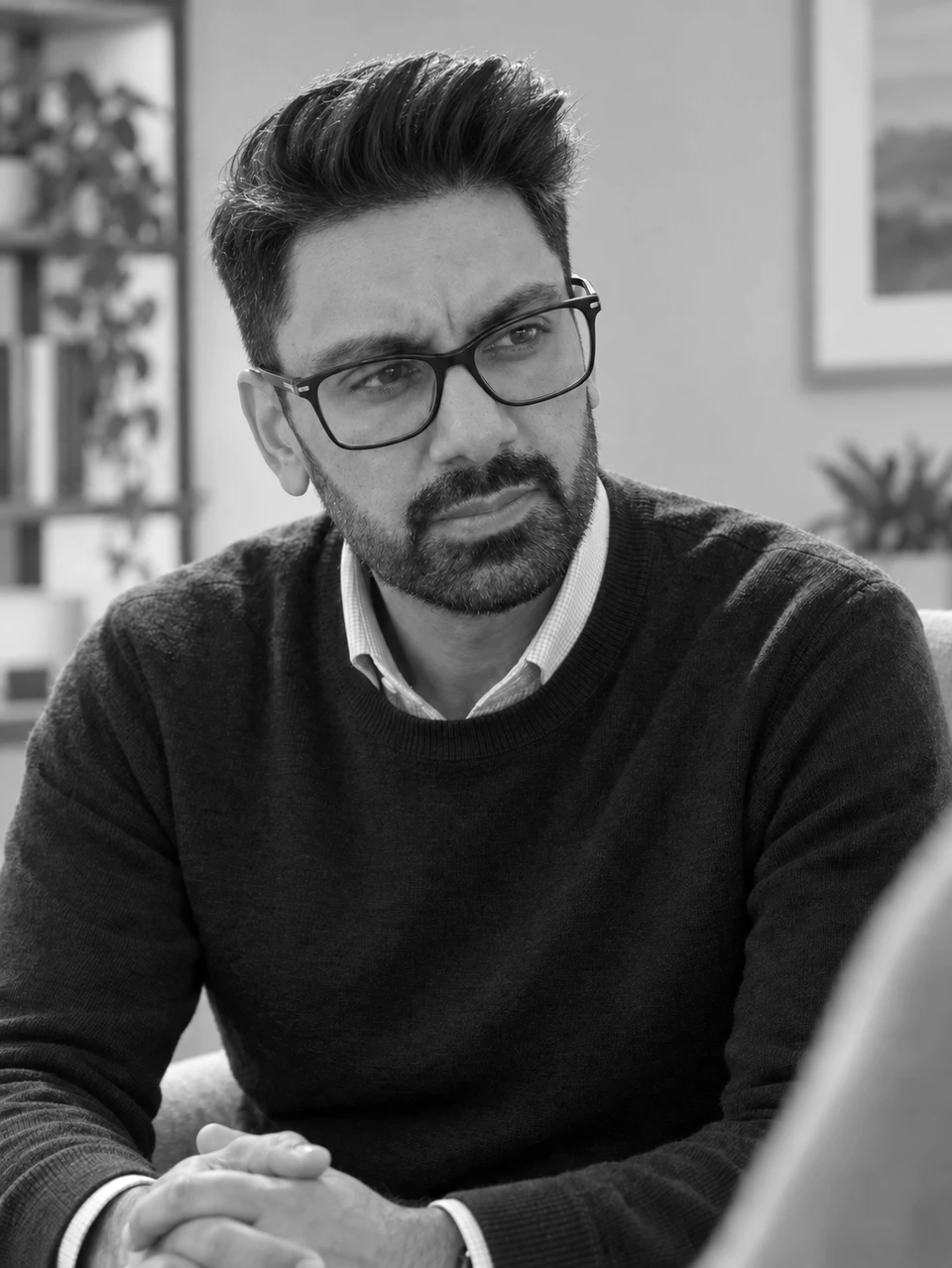
Experience may shape my questions, but it does not define who you are.
Clarity can develop at its own pace.
Regular meetings, privacy and clear boundaries can create a pause from outside demands.
Silence and uncertainty do not have to be hurried away, and interrupted thoughts can begin to take shape.
Over time, you may discover what it is like to be listened to without managing the listener, and what becomes possible when difficult feelings are given space.
Ways of coping often developed for a reason. Understanding what they protected or made possible can help you decide what to keep and what you would like to change.
I offer individual counselling and psychotherapy to adults experiencing depression, anxiety, bereavement, trauma, relationship difficulties, complex trauma, dissociation or longstanding struggles involving mood, identity, trust, emotional regulation or a sense of self.
Sometimes there is no clear name for what is happening. You may feel overwhelmed or cut off from emotion, lose confidence or direction, or find relationships returning to the same painful place.
I may be able to work with people who experience unusual perceptions, voices or beliefs when they remain able to manage everyday life, recognise that their experiences may not reflect external reality, and engage safely in individual online therapy. If difficulties are severe, functioning is significantly impaired, reality testing is substantially reduced, or crisis or multidisciplinary care is needed, this service is unlikely to be appropriate.
Culture is part of every life. Language, faith, family roles and community expectations can shape what is expressed or kept private, while inherited expectations and pressure to belong may affect relationships and identity.
I work in English, Urdu, Hindi and Punjabi. Knowing more than one language and cultural world may help me understand context, but never replaces curiosity about your individual experience.
I do not offer couples or family therapy. If another form of therapy or a specialist service may meet your needs better, I will be honest about that.
These short reflections explore fear, relationships and parts of ourselves that are not easily seen.
Read the earlier reflections →
MBACP
MNCPS (Acc.)
Interpersonal Psychotherapy
You can check availability or send a brief enquiry without explaining everything or making a decision straight away.
Send a private enquiry Check current availability →